For many people, Wes Anderson’s thematic approach in each of his movie is especially iconic. But for some, the director’s expertise has become practically monotonic. On the other side, there is Sofia Coppola with a different visual aesthetic. Let’s dive into their cinematic aquarium!
FIRST TO NOTICE
When we talk about indie movies with a particular style, names like Sofia Coppola and Wes Anderson are probably the first that come to mind. They each hold specific keys to engage the emotional responses of the audience. Sofia Coppola has aesthetics that she keeps firmly in her movies; one of them being the visual mood and tone of the scenes. She often uses colours to pour her message into the audience mind. For example, if you notice, there are shades of blue that saturate scenes in her trailers, evoking a romantic melancholy characteristic. She uses this colour to highlight the loneliness of her central characters, like Charlotte in “Lost in Translation”, Cleo in “Somewhere” and the Lisbon sisters in “The Virgin Suicides”. Those characters seek to define themselves independently of the oppression around them. The hazy, blue filter that literally surrounds the main characters is intended to mimic their desperation. The first person to apply colour in his cinematography technique is Roger Deakins. Since his film, “O Brother, Where Art Thou?” in 2000, digital colour grading has globally extended as a standard among filmmakers.
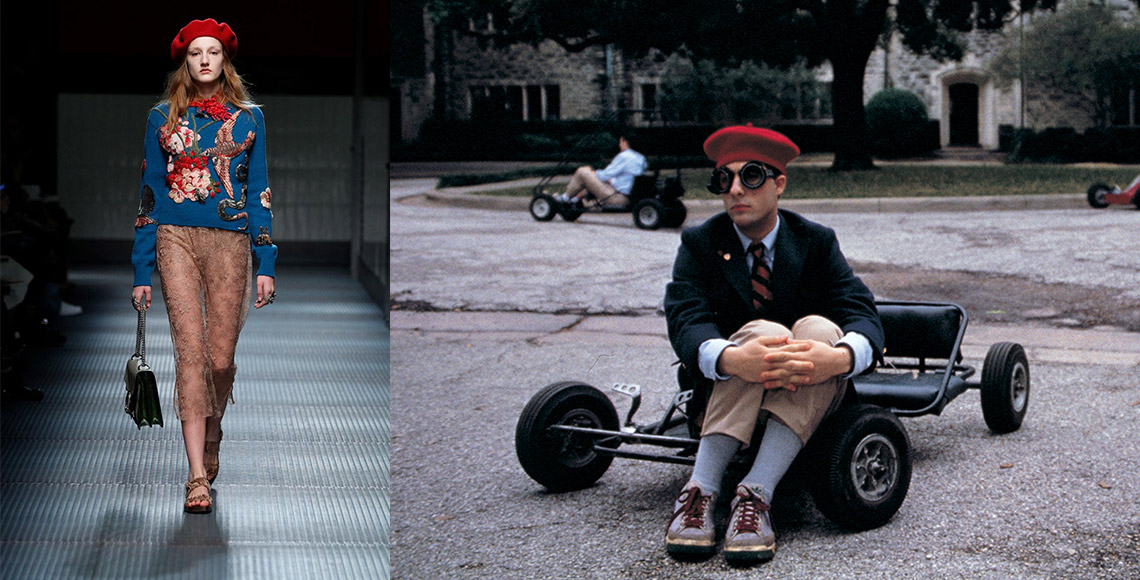
This colour hue trait is also used by the American film director, Wes Anderson, who has been developing a similar kind of approach since his first movie. Having a significantly visible style, Anderson never fails to hook his audience rather positively. His themes are always relevant, the characters he creates are easy to relate to, and most importantly, the visuals are easily distinguishable; all of these characteristics work together harmoniously to create Wes Anderson’s distinct dreamlike atmosphere. With the subtle pastels of the colour palette, he is one of the most talked about directors in the pop culture. He shoots his movies with a warming filter and then later corrected to saturate certain colours; yellows and earth green for “Moonrise Kingdom”, reddish orange for “The Royal Tenenbaums”, and bright pink and purple for “The Grand Budapest Hotel”. Each of his films contains apparent imaging details that set the films in a fantasy world. “I don’t want to have an invisible style, but I don’t care about having a trademark. My writing and my way of staging the scenes and shooting – people can tell it’s me, but that’s not by my choice. It naturally happens. It’s just my personality as a director,” says Anderson in an interview.
TWO OF A KIND
Having something in common in directing method, both Coppola and Anderson surely have certain trademark to support their fundamental styles. Sofia Coppola’s main roles often express their personal characteristic in a bold fashion statement, making her influence on fashion remarkably strong. This not only comes from the heroines in her movies, but also the well-known collaboration with Louis Vuitton, where she designed several of their bags in the Spring/Summer ’16 collection. “Designing a bag and directing a film involve the same approach – it’s like creating a character in a story and envisioning the universe that the character belongs to,” she once said. In her debut film, “The Virgin Suicides”, Sofia dressed the poignant, mischievous and melancholy Lisbon girls in colourful bandeau tops and managed to make their strict Catholic school uniforms look surprisingly chic too. The plain dresses they wore to their prom even inspired Rodarte Autumn/Winter ‘14 theme. Kristen Dunst’s rebelliously girly outfits in “Marie Antoinette” also received controversial comments for its mixed period costumes and modern music. It was something that’s never been done before in a classical themed movie.

For Wes Anderson, there are certain people who match his standards and constantly help translating his ideas into a perfect visual form. First on the list would be the senior cinematographer, Robert D. Yeoman, whose involvement is crucial in every Wes Anderson film. Anderson personally wrote the cinematographer to take part in his first directed film, “Bottle Rocket” – which was co-written by his best friend, Owen Wilson. Ever since this collaboration, the two become inseparable. Yeoman has participated in every live action film of Wes Anderson, and will also take part in the upcoming animation, “Untitled Wes Anderson Project”. Planned to be released in 2018, this will be their first animated collaboration. Being known as a guy who dresses up, Wes also never forgets to add his fashion sense into each of his characters, which results to some peculiar and quirky dress up styles. Many worldwide fashion houses and designers have credited the well-known director as their muse and source of inspiration – one of them being Gucci for Alessandro Michele’s debut collection. Being authentic, similar and conspicuously distinct, Wes Anderson and Sofia Coppola are among the popular topliners whose influence is always awaited by people of modern culture. Let’s see what these directors got in mind for their future projects!